
San Saba County Criminal Court Cases
San Saba County divides criminal court records by jurisdiction, which means the court's legal power to hear a type of case. The 33rd and 424th District Courts hear felony matters. The constitutional County Court handles Class A and Class B misdemeanors. The countywide Justice Court and San Saba Municipal Court keep their own fine-only Class C and ordinance matters. The filed cause number, charging paper, settings, orders, and final judgment stay with the clerk for the court that heard the case. One person's arrest can lead to more than one record, but the court case file is the source for what prosecutors filed and how the judge resolved it.
The combined County and District Clerk serves both felony and county misdemeanor files from Suite 202 at 500 E. Wallace Street, San Saba, Texas 76877. The phone is 325-372-3614. The District Clerk page and County Clerk page identify the same local office while preserving the two legal roles. Posted hours are Monday through Thursday, 8 a.m. to noon and 1 to 5 p.m.; Friday hours are 8 a.m. to noon and 1 to 4 p.m. The office closes for lunch.
Two San Saba District Courts
Felony files may carry either the 33rd or 424th District Court label. Current state material names J. Allan Garrett for the 33rd District Court and Evan Stubbs for the 424th. Their judicial administrative offices are in Burnet, but that does not move the San Saba County criminal court record out of the county. Suite 202 remains the local record contact. The distinction matters when asking for a setting, judgment, or certified copy because staff need the correct court and cause number.
The official 424th District Court page helps identify the court, while the local clerk page identifies the custodian. A felony prosecution also involves the 33rd/424th Judicial District Attorney, whose main office is in Burnet County because the district spans San Saba, Blanco, Burnet, and Llano counties. Prosecutors present the case. They do not replace the clerk as the routine source for filed pleadings and judgments.
The official District Clerk source shows the local felony record channel.
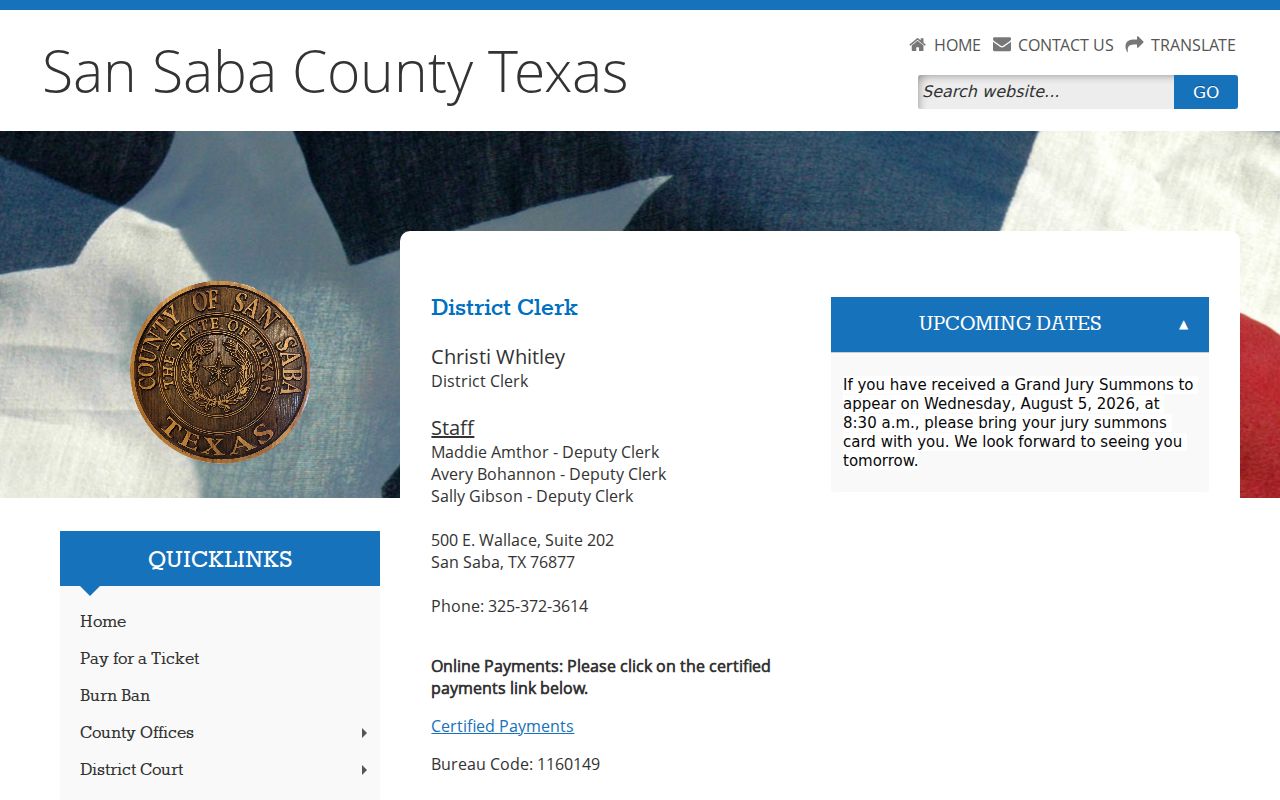
This clerk page ties San Saba County felony case requests to the office that holds the original local file.
Searching San Saba County Case Records
No county portal or public San Saba County criminal docket index was found in the official sources. Begin with the clerk, not a statewide civil portal. Full names, an approximate filing or arrest date, the likely charge level, and a cause number when known can narrow the inquiry. Ask what can be inspected, whether an older file needs archive retrieval, and whether the office can provide plain or certified copies. Local pages do not publish criminal copy, search, or certification fees, so request a current quote before ordering.
- Decide whether the matter is a felony, Class A or B misdemeanor, or fine-only Class C case.
- Call the County/District Clerk at 325-372-3614 for felony and county misdemeanor files, or the proper JP or municipal clerk for fine-only matters.
- Give the full name, approximate date, charge level, court, and cause number if known.
- Ask to inspect the charging instrument, docket, disposition, judgment, and sentence instead of relying on a payment result.
- Request the available delivery method and a fee quote for a plain or certified copy.
These are the useful search details for a direct San Saba County clerk inquiry. None is a claim that the county offers an online form.
| Search detail | Format | Use | Important limit |
|---|---|---|---|
| Full name | Text | Identifies the party | A shared name may need more context |
| Cause number | Case identifier | Best direct file key | Use it only when confirmed |
| Approximate date | Date or year | Narrows active and archived files | Exact coverage is not posted |
| Charge level | Felony, A/B, or Class C | Routes the inquiry to the right court | An arrest charge may later change |
| Copy type | Inspect, plain, or certified | Defines the requested result | Ask the clerk for the current fee |
San Saba Court Search Dead Ends
re:SearchTX is an official Texas court tool, yet the Texas Judicial Council states that criminal case records are excluded. That makes it the wrong place for a San Saba County criminal case search. EFileTexas accepts electronic filings, and Certified Payments processes payments. Neither service is proof of a complete public criminal docket search. A payment screen also cannot establish every charge, motion, dismissal, or judgment in the clerk's file.
The Texas Local Rules Search serves another purpose. It can locate rules used by the 33rd and 424th District Courts and the County Court, but rules are not party-specific case records. Use them to understand filing or procedure, then direct the record inquiry to Suite 202. This official local-rules source documents the rule-search channel available to San Saba County court users.
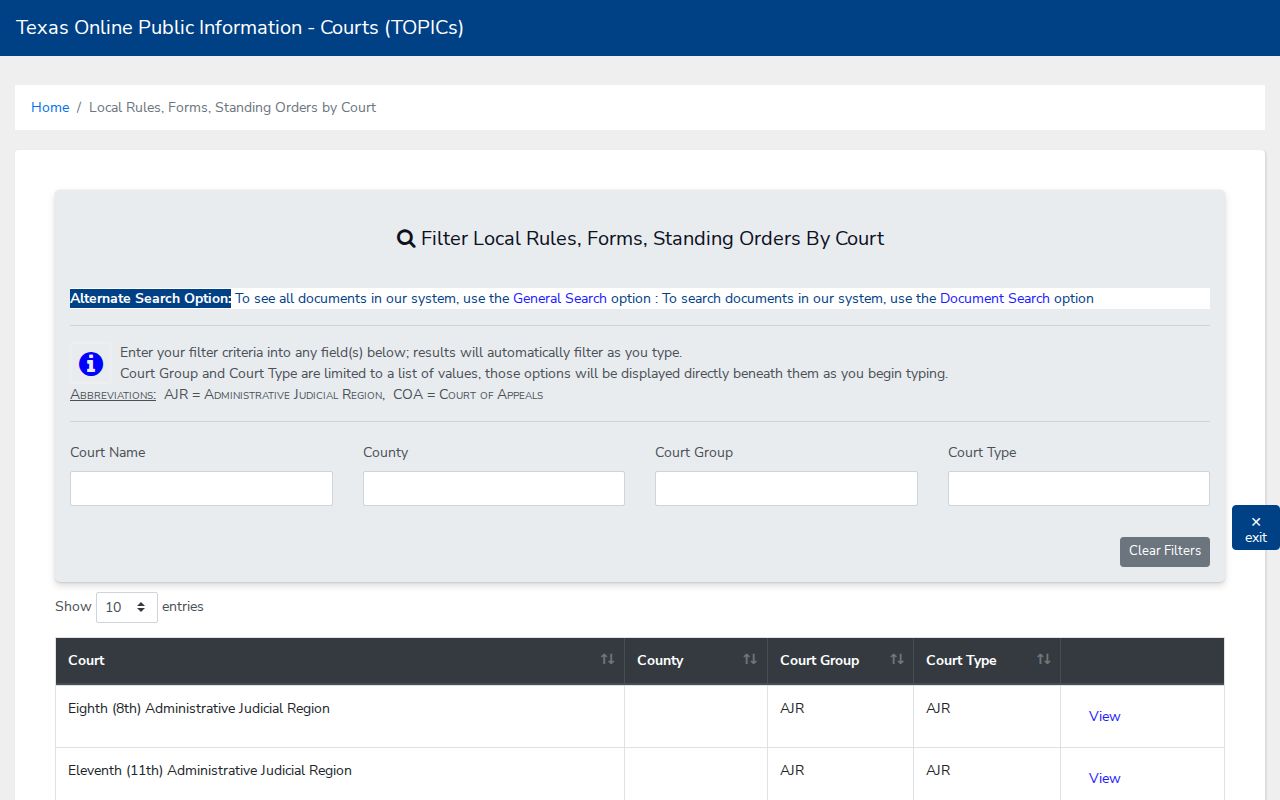
The image helps separate a statewide rules lookup from the local clerk search needed for a named criminal case.
Portal limit: re:SearchTX excludes criminal records, while EFileTexas and Certified Payments handle filing or payment rather than full docket research.
Inside a San Saba County Case File
A San Saba County criminal case file centers on one cause number. It may show the court, parties, charging instrument, docket events, hearing settings, signed orders, plea, disposition, judgment, sentence, and court costs. A complaint is a sworn allegation that can begin a process. An information is a prosecutor-filed charging paper commonly used for a misdemeanor. An indictment is the grand jury's formal felony charging instrument. These papers answer a different question from the arrest report, which records what the arresting agency alleged at the start.
| Case Number & Court | Identifies the cause and the San Saba County court with jurisdiction. |
|---|---|
| Charging Document | Shows the complaint, information, or indictment actually filed. |
| Docket Entries | Lists filings, settings, orders, and other recorded case events. |
| Hearing Dates | Shows scheduled proceedings and may show resets or completed settings. |
| Disposition & Judgment | Records the outcome and any formal judgment rather than the intake charge. |
| Sentence & Conditions | States punishment, costs, and court-ordered terms when applicable. |
Read the charging paper and final judgment together. Initial allegations can be reduced, replaced, dismissed, deferred, tried, or resolved by plea. A docket entry can point to an event without containing the full signed order, so request the underlying document when the distinction matters.
Reading San Saba Case Outcomes
Outcome terms carry precise meanings in San Saba County court records. A dismissal ends the filed charge without a conviction, but it does not by itself erase each agency record. Deferred adjudication places a person on community supervision without an immediate judgment of guilt. Successful completion still does not make every public record vanish. A conviction is a judgment of guilt, while an acquittal is a not-guilty result after trial or a directed finding.
- Disposition
- The recorded outcome of a charge or case.
- Arraignment
- The proceeding where the accused receives the formal charge and enters a plea.
- Nolle prosequi
- The prosecutor's formal choice not to continue a charge at that time.
- Deferred adjudication
- Community supervision without an immediate judgment of guilt.
- Judgment
- The court's signed record of the adjudication and result.
A reader reviewing a San Saba County criminal court record should not infer the final result from the arrest charge or a single docket line. The signed disposition and judgment carry the stronger answer. If a dismissal or deferred result may qualify for expunction or nondisclosure, the current remedy and eligibility rules must be checked separately.
How a Criminal Case Moves
A San Saba County felony case can begin with a complaint and later proceed through grand-jury action. A misdemeanor may proceed by information. Arraignment places the formal charge and plea on the record. Pretrial work can include motions, discovery issues, settings, and negotiated pleas. A trial or plea then leads to disposition, and a judgment may include a sentence and community-supervision conditions. Exact timing is case-specific, and no official local source publishes a standard completion schedule.
Case flow: Charges Filed › Arraignment › Pretrial › Plea or Trial › Disposition › Sentencing
The clerk's docket traces this path, but some events require the actual motion, order, or judgment for context. A case that ends in the trial court may also move to the Third Court of Appeals. Appellate review creates a separate record layer, while the San Saba County clerk retains the local trial file.
San Saba Court Jurisdiction Lines
The same building and even the same combined clerk do not merge each court's jurisdiction. The 33rd District Court and 424th District Court cover felony jurisdiction. County Court is the place for Class A and B misdemeanors. The countywide Justice Court at Suite 110, 325-372-5746, handles fine-only matters within its authority and magistration. San Saba Municipal Court handles city ordinance and municipal Class C matters. Its city materials also use a different address from the county-hosted page, so callers should confirm the current location before travel.
The official County Clerk source identifies the local misdemeanor record office and posted counter hours.
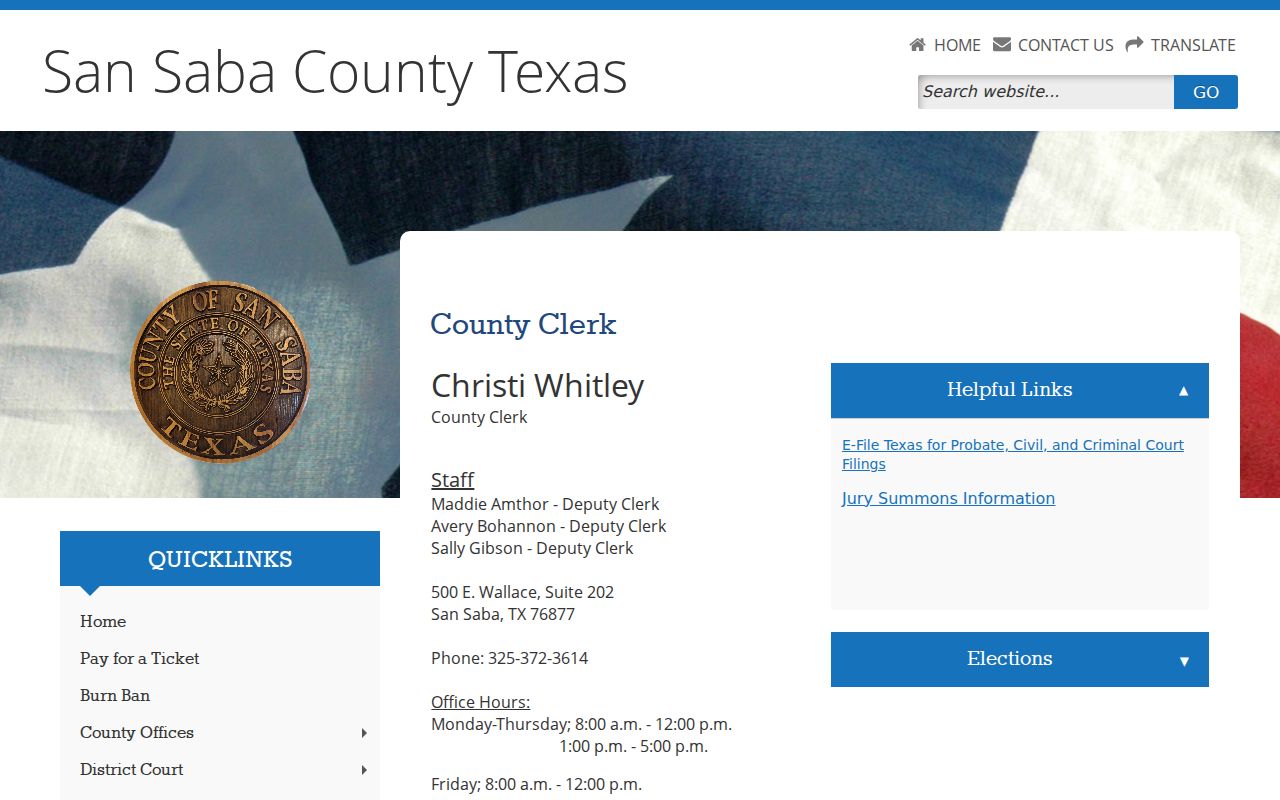
This source reinforces why Class A and B case files stay with the county role even though the clerk also serves the district courts.
| Court | Criminal role | Local record contact |
|---|---|---|
| 33rd District Court | Felony cases | District Clerk, Suite 202, 325-372-3614 |
| 424th District Court | Felony jurisdiction | District Clerk, Suite 202, 325-372-3614 |
| Constitutional County Court | Class A and B misdemeanors | County Clerk, Suite 202, 325-372-3614 |
| Countywide Justice Court | Class C and fine-only matters | Suite 110, 325-372-5746 |
| San Saba Municipal Court | City ordinance and municipal Class C | 325-372-5144 |
Case Record Access & Restrictions
Texas court files may be open for inspection, but public access is not the same as unlimited disclosure. Juvenile material, victim identifiers, Social Security numbers, financial identifiers, and records covered by expunction or nondisclosure can be confidential, removed, or redacted. An order of nondisclosure restricts public criminal-history dissemination while preserving access allowed by law. Expunction is a different remedy that directs covered custodians to remove or destroy qualifying records.
The Texas Public Information Act governs many executive-agency records, but judicial case files should be requested from the court clerk. The criminal-history rules in Government Code Chapter 411 also do not turn the DPS public product into a substitute for the local case file. When a named case does not appear through any public tool, ask the San Saba County clerk about its court, archive status, and any lawful restriction rather than assuming the record never existed.
San Saba Certified Court Copies
A certified judgment bears the clerk's formal certification and may be needed when the authenticity of the court record matters. San Saba County does not post a criminal copy or certification fee schedule on the reviewed clerk pages. Call Suite 202 before sending payment. State whether the request is for inspection, a plain copy, or a certified copy, and identify the exact judgment or order. Ask about mail delivery and archive retrieval if travel is not practical.
People who need appointed counsel should not look for a permanent San Saba public-defender office. The county uses a court appointment plan documented by the Texas Indigent Defense Commission. A person asks the court for counsel and completes the required financial affidavit. That process concerns representation, not public record retrieval.
The official San Saba indigent-defense plan documents the appointment route and forms.
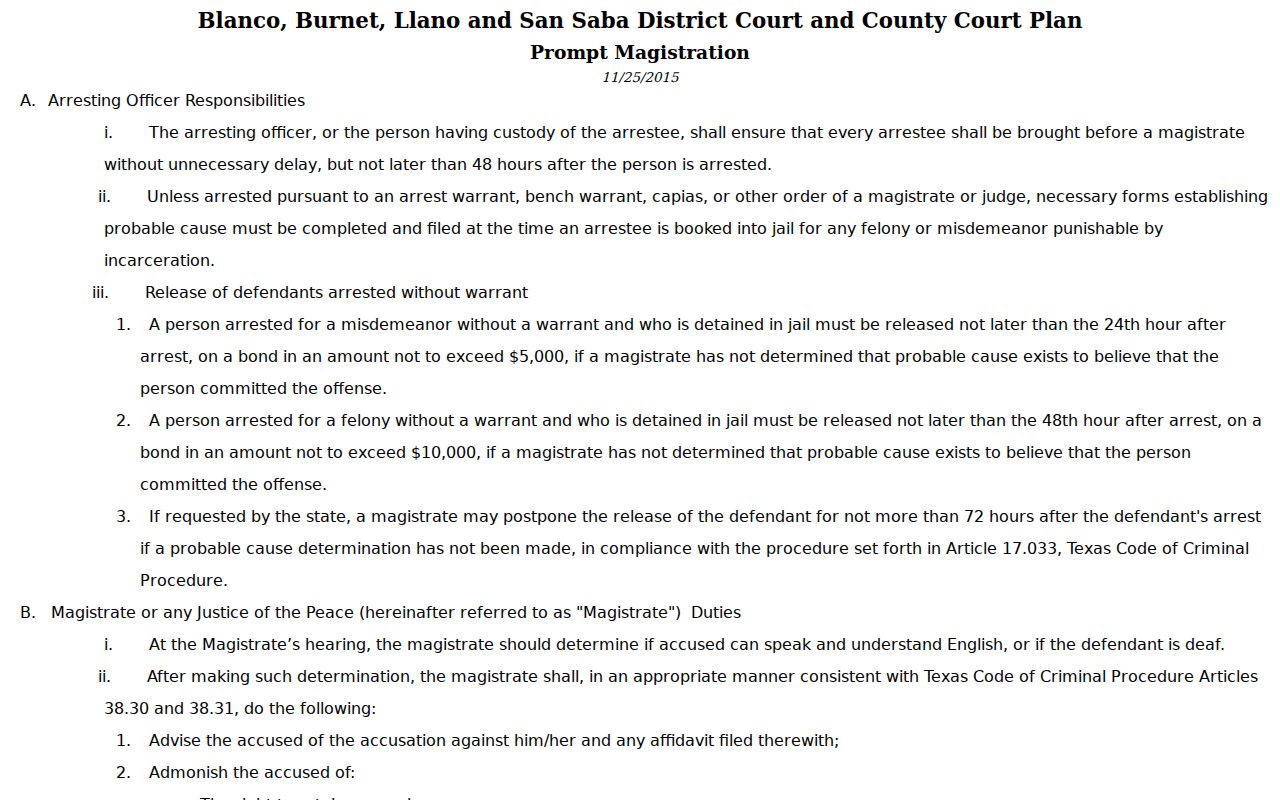
The plan shows why counsel requests go through the court while docket and judgment copy requests remain with the clerk.