
Sex Offender Checks in San Saba County
Texas DPS manages the Texas Public Sex Offender Registry under Code of Criminal Procedure Chapter 62. The public search is free and does not require the secure criminal-justice login. It is the main source for a San Saba County sex offender search because neither the county nor the City of San Saba posts a separate local database. Search by the best known identity or location details, then open a profile to compare the offense, address information, registration status, and physical identifiers.
A local authority still has a core role. A registrant ordinarily reports to city police when living in a municipality and to the county sheriff when living outside one, subject to any local arrangement. Those authorities collect and verify registration data, then send it to DPS. The public profile is therefore a state display fed in part by local registration work, not an independent San Saba County case file.
San Saba Registration Starts Locally
San Saba County does not publish a separate registration-counter schedule, appointment rule, fee, or named registry unit. A person who must register should confirm the correct reporting authority before arriving. Residents outside a municipality can begin with the sheriff at 325-372-5551. Within the City of San Saba, call police at 325-372-6292. The official sources do not establish that every address uses the same counter or schedule.
The San Saba County Sheriff page provides the county office contact used to confirm the local process. The local office should confirm registration logistics, while public community searches remain on the DPS registry.
San Saba County Sheriff
500 E. Wallace Street, Suite 206
San Saba, TX 76877
325-372-5551
Call to confirm the registration authority and schedule.
San Saba Police
113 S. Liveoak
San Saba, TX 76877
325-372-6292
Call to confirm city registration procedures.
How to Search the Texas Public Sex Offender Registry
The official registry offers several ways to narrow a San Saba County search. The dynamic interface showed tabs for popular searches, registry search, SID, address and city, name, map, information, advanced tools, and resources. Some dropdown options did not render during research, so no unverified radius or full option list should be assumed.
- Open the Texas DPS public registry and review its search conditions and information.
- Choose a name, SID, city, street, ZIP Code, county, map, or advanced search path that fits the facts known.
- Use enough detail to narrow results, then compare identity and place fields rather than relying on one shared name.
- Open the matching public profile and read the reportable offense, address or geography, risk, vehicles, and registration status together.
| Control | Type | Required | Use |
|---|---|---|---|
| Search tabs | Tabs | Not applicable | Name, SID, address, city, map, advanced, and resource paths |
| City Name | Text | Yes where marked | Limits results to a named city |
| State and Address Type | Dropdowns | Not specified | Texas and “All” were observed; full lists were unresolved |
| City, Street, ZIP Code | Text | Not specified | Location fields for place-based review |
| County | Selector | Not specified | Use San Saba County when the options load |
| Start Date and End Date | Date text | Not specified | Month, day, and year format |
| Primary Only and Map Current Only | Checkboxes | Not specified | Optional filters shown by the interface |
The Texas Public Sex Offender Registry is the official statewide search.
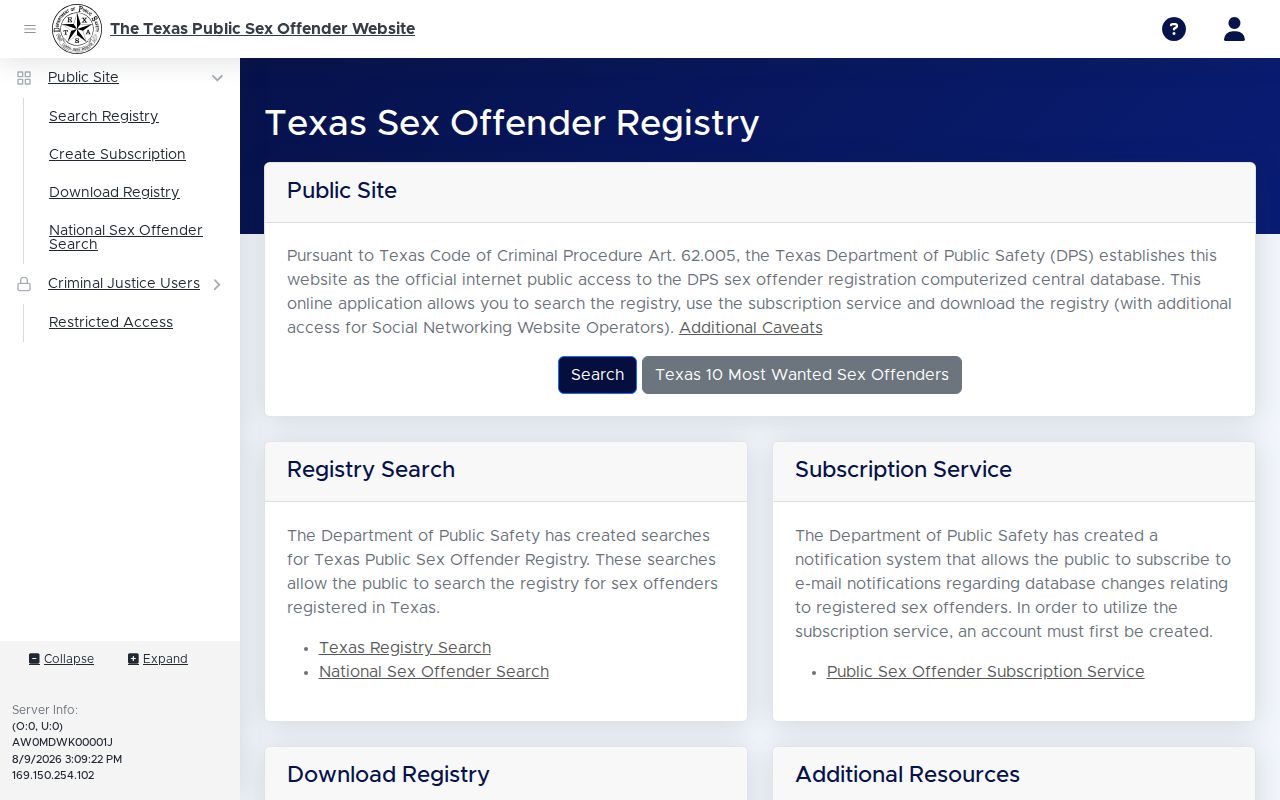
The image shows the state layer San Saba County residents use because no separate local public registry was confirmed.
San Saba Registry Search Controls
Choose the search mode by the question. A name search helps when the person is known, but an address, city, ZIP Code, county, or map search better supports community awareness around a place. The “Primary Only” and “Map Current Only” labels can narrow some results, though the official inspection did not establish every option’s full effect. Clear and Submit controls reset or run the query.
DPS describes the Texas Sex Offender Registration Program and its public-notice role.
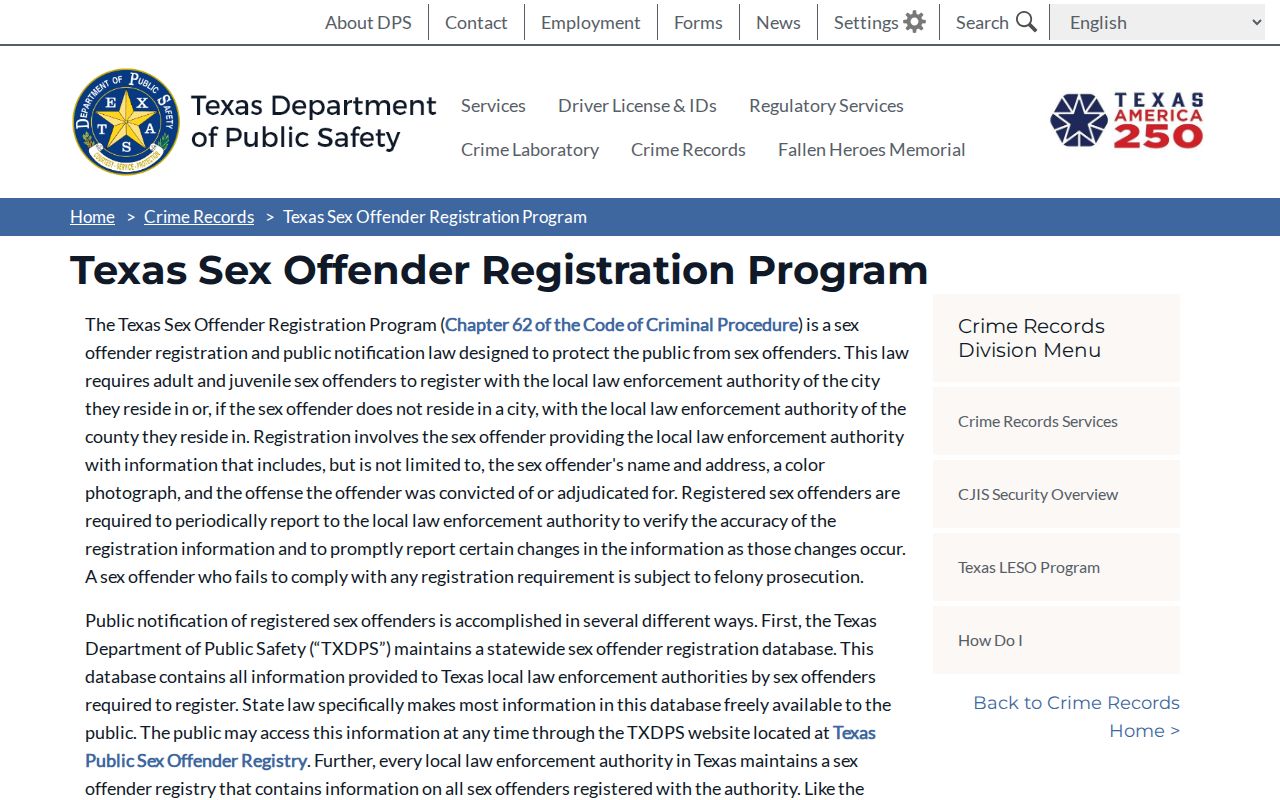
That program overview supplies context for the searchable profile, while the registry interface supplies the actual public results.
Note: No official San Saba County registry app, proximity alert, email alert, or separate local map was found.
Inside a Registry Profile
Chapter 62 defines the data collected for registration and the subset that may be made public. No private person’s profile was opened during research. The inventory below comes from the statute and DPS materials, so it describes fields a public San Saba County registry profile may show without implying that each profile contains every item.
| Name and aliases | Public identity names used to distinguish a registry entry. |
|---|---|
| Photo and description | Photograph plus public sex, race, height, weight, eye color, and hair color data when displayed. |
| Address or geography | Public residence address or geographic description allowed by law. |
| Reportable offense | Offense type, date, court, cause number, and other public case details where shown. |
| Risk and status | Numeric risk information, registration status, and supervision information in the public subset. |
| Vehicles | Specified vehicle and license information collected under Chapter 62 when public. |
San Saba Registry Public Fields
Not all data collected under Chapter 62 belongs on a public profile. Social Security numbers, driver-license numbers, phone numbers, protected online identifiers, and victim-identifying information are excluded from public release. Fingerprints help authorities administer the system but are not a public search feature. These limits protect sensitive data while leaving the identity, location, offense, risk, vehicle, and registration fields authorized for public notice.
The official text of Texas Code of Criminal Procedure Chapter 62 sets the registration and disclosure rules.
The statute is the source for both public disclosure and the fields that must remain outside a San Saba County registry result.
Texas Registration Levels and Requirements
Texas uses risk designations, but those labels are not federal SORNA tiers and do not by themselves determine how long registration lasts. Duration follows the offense and statutory category. Adult duties are generally for life in lifetime categories or through the tenth anniversary of the relevant release, discharge, or dismissal date for non-lifetime categories. Juvenile rules vary.
| Designation | Meaning | Duration and verification |
|---|---|---|
| Level 1, low | Low danger and not likely to continue criminal sexual conduct | Duration follows the offense; annual verification is the general rule |
| Level 2, moderate | Moderate danger and may continue criminal sexual conduct | Duration follows the offense; some histories trigger 90-day verification |
| Level 3, high | Serious danger and expected to continue criminal sexual conduct | May trigger heightened notice; duration still follows the statutory category |
| Civil commitment | Separate sexually violent predator designation | Specialized rules apply |
The official DPS registry questions and answers explain risk, duration, verification, and notice.
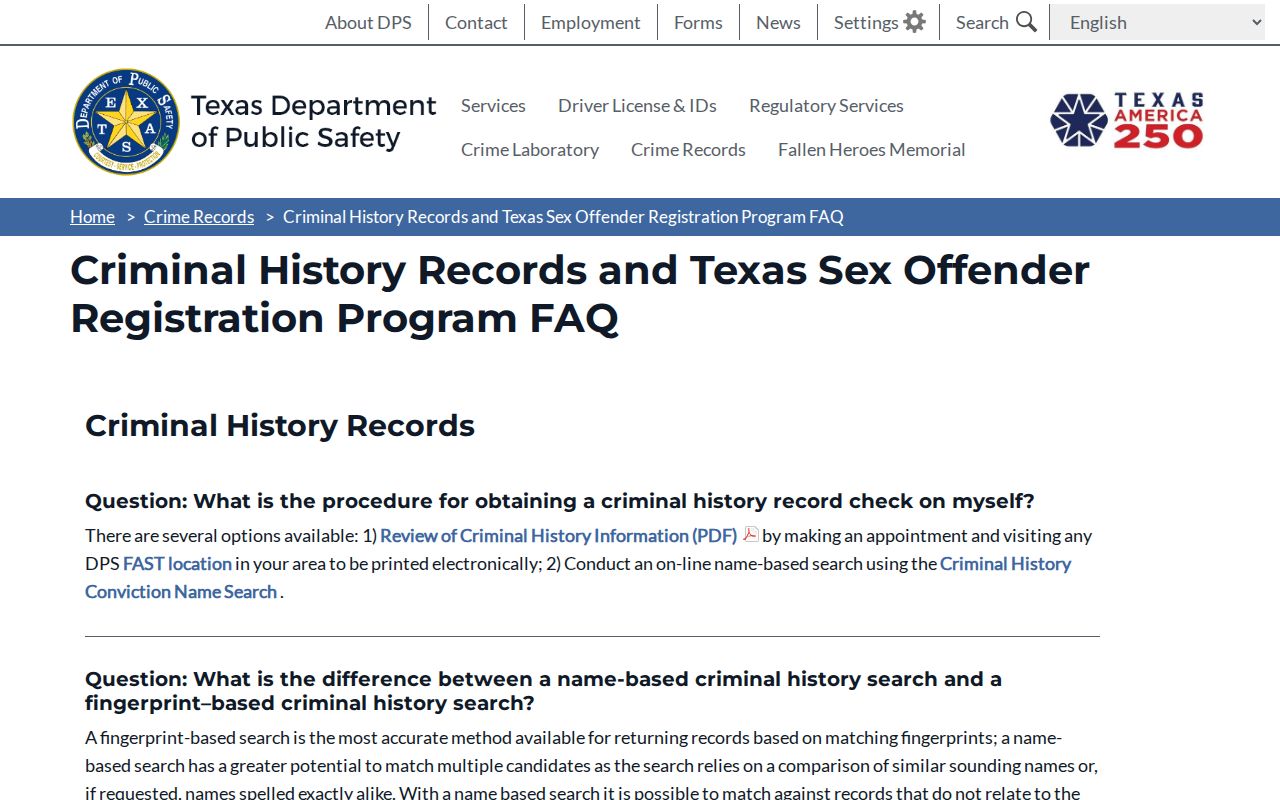
This state guidance prevents a San Saba County risk label from being mistaken for a fixed ten-year or lifetime term on its own.
San Saba Registry Verification Schedules
Annual verification generally occurs within the 30 days before or after the registrant’s birthday. A person with two or more reportable events, or a specified sexually violent offense, may have to verify every 90 days. The responsible city police department or sheriff performs the local verification role and reports updates to DPS. San Saba County does not publish a dedicated counter calendar, so the reporting person should call the correct authority rather than relying on general state timing alone.
For public searchers, a verification date and current status should be read with the rest of the profile. A recent date does not replace the address, offense, and status fields. If information looks stale or inconsistent, note the record details and report the issue to the responsible police department or sheriff. Do not confront the subject of the profile.
NSOPW for San Saba Registry Searches
A Texas DPS search is the direct state source for San Saba County records. When a name or address history crosses state lines, the National Sex Offender Public Website adds a federal search layer across participating jurisdictions. NSOPW does not create the underlying registration data. It routes public searches across government registries, so the originating state or territory profile remains the place to confirm details.
The official National Sex Offender Public Website is the appropriate cross-state channel.
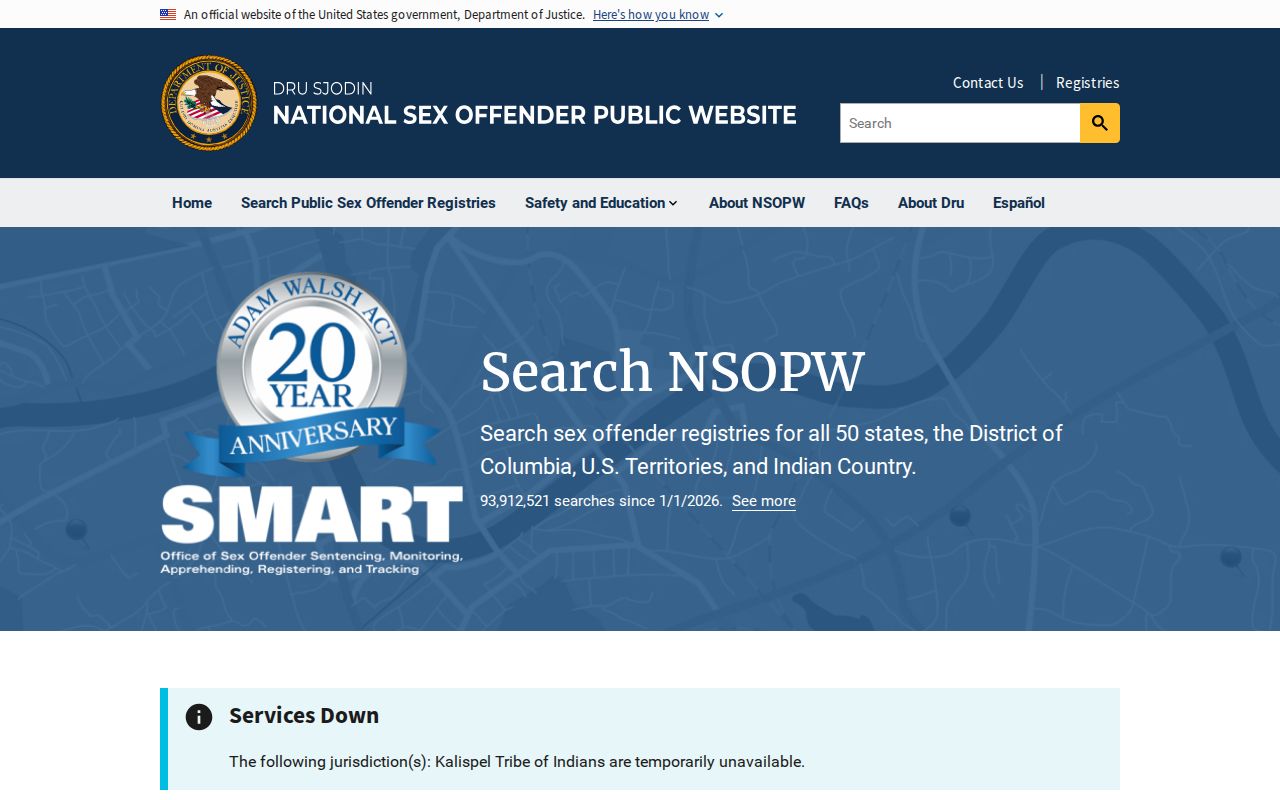
This national search is most useful as a second layer when a San Saba County result suggests another jurisdiction may hold the source record.
San Saba Community Registry Notices
Texas law provides heightened community notice for certain high-risk moves and civil commitment cases. DPS guidance describes postcard notice to each address and business within one mile in an unsubdivided area or within three blocks in a subdivided area. Schools also receive notice under the statutory process. These distances describe that notice rule, not a general residency boundary.
No separate San Saba County community meeting, local residency ordinance, proximity alert, or registry app was verified. The official county directory and the City of San Saba’s department directory provide local contact starting points when the responsible authority is unclear. Official registry and agency channels should be used for safety planning and apparent noncompliance reports.
Community Notification and Lawful Use
Registry information supports community awareness and personal safety. It does not authorize threats, stalking, harassment, vigilantism, trespass, or interference with a registrant’s household. Report apparent noncompliance to the police department or sheriff responsible for the address. Give the agency the profile details and the reason the data appears wrong, then allow that authority to verify the report.
Use registry data lawfully: Texas Chapter 62 does not make every misuse a universal registry crime. Other criminal or civil laws may apply to threatening, harassing, or unlawful conduct, while Chapter 62’s specific $1,000 civil penalty concerns defined commercial social-networking misuse.
A public San Saba County sex offender profile can also be incomplete or out of date. Confirm urgent safety concerns with law enforcement. For an apparent data error, contact the local registration authority and Texas DPS rather than trying to correct or enforce the record personally.